ALL SPEAKERS
AT A GLANCE
Role
Founder & Author
Organisation
Category
Hero
ABOUT THE SPEAKER
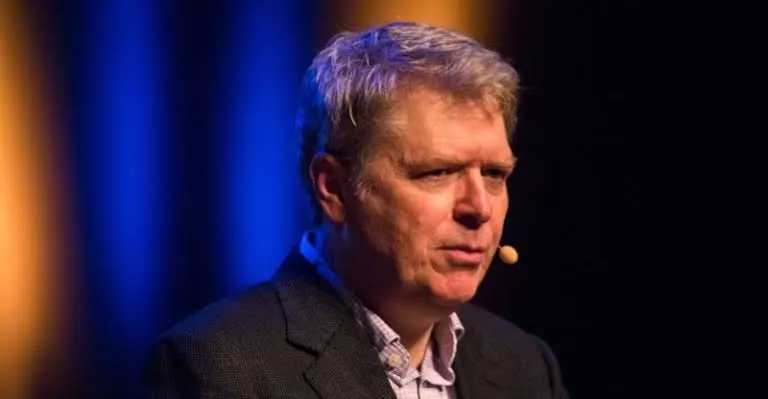
Eric has long worked in the development of software for complex domain problems. He wrote the book Domain-Driven Design and has been learning new and better ways to do it ever since.
TALK
DDD & AI: My Learning Journey, Continued
Domain-driven design (DDD) is an approach to software design that focuses our effort on the center of the problem we are solving, the complexity in the domain itself. We iteratively sharpen this focus through the lens of a constructed language, applied within explicit system boundaries that give context to that language. These are the fundamentals of DDD, and they have proven robust for more than 20 years. But we don't practice DDD the same way we did 20 years ago. DDD has always been adapted to changes in the software development industry, in team processes and in technology. Now AI technology is bringing a massive wave of change. I believe we'll need forums like this conference even more, to grapple with it together.
Will AI amplify DDD or replace it? We can't know that now; the coming years will tell. With imperfect knowledge, what can we do to adapt, as individuals and as a community? I'll share my own answer. My working hypothesis: domain models still matter, bounded contexts still matter, language still matters -- but the models will look different.
To make it tangible, I'll share an experiment of mine that uses LLM components and deterministic calculations to extract domain-related vocabulary from code and compare usage across codebases. I imagine it might give us a more objective, quantitative way to look at bounded contexts and relationships. It is an idea I tried years ago, but it wasn't feasible until we had software that could interpret word usage. (Pleased as I am with my results, I expect this will all seem like baby steps in a few years.)
I'll also briefly touch on my other areas of study. My opinion is that learning to use LLMs well requires more than interacting with their API. In DDD we don't like black boxes. Understanding the math of a transformer or the training objective develops intuition for using them and ages better than the latest prompting trick. More specifically relevant to DDD, LLMs do have conceptual models in them -- complex, stochastic and tangled. I'm making a bet that understanding what's happening in there will help us address the deep-domain problems where DDD has always mattered most. We won't have time to go into this in detail, but I'll outline some topics I find relevant and interesting.
Finally: the fear and dread for our whole society. There is risk in such an enormous change, happening so fast and with such recklessness. Who knows. Maybe this current approach to AI will reach a plateau soon. I'd honestly welcome that! Society would have a chance to assimilate what we have now, and there would be so much interesting work for us to do. However, my preferences (or yours) don't have much effect on what will actually happen. What little influence we have will come from engaging in the unfolding of its possibilities, and this likely also gives us our best chance to thrive. Diving deep into these matters may produce valuable results and build resilience. It will surely be intellectually fascinating.
MORE VOICES
Other speakers at code.talks


See them live — and 100+ more.
One ticket, every track. Nov 4–5, 2026 at Kinopolis Hamburg.
Get your ticket